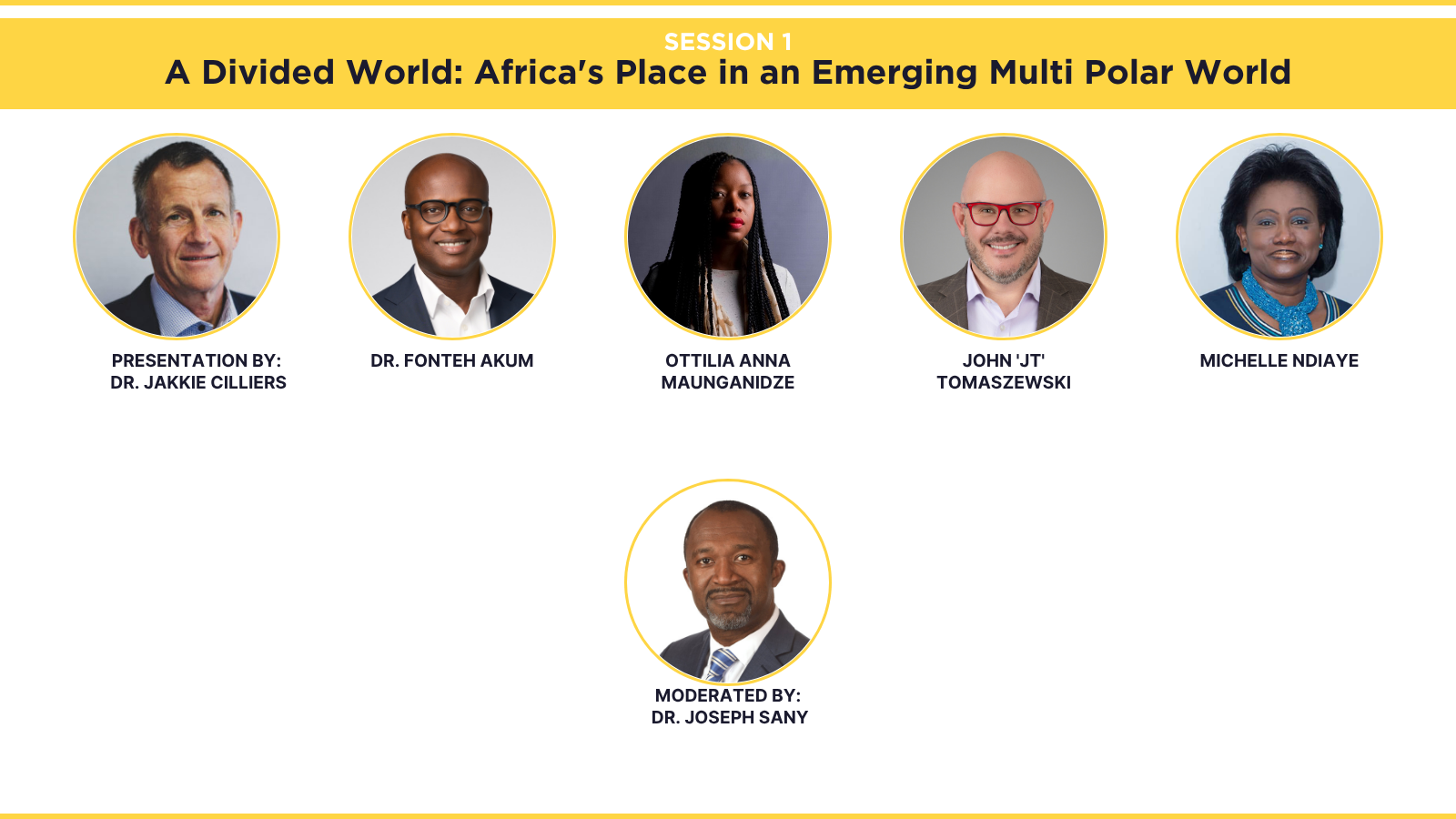
Session 1: A Divided World: Africa’s Place in an Emerging Multipolar World
This session will open with a keynote presentation on Africa and the world followed by a panel that will examine the U.S. civilizational narrative and Western geopolitical identity, including how these are reflected in the U.S. National Security Strategy and whether they advance African agency. It will also explore the broader consequences of rising levels of instability globally that appear to reflect a breakdown of the international rule of law and order, including how dynamics within global governance platforms such as the G20 are shaping the trajectory of U.S.-Africa policy and Africa’s positioning in the global system.
-
Dr. Jakkie Cilliers (Presenter)
Dr Jakkie Cilliers is the founder and former executive director of the ISS. He currently serves as chair of the ISS Board of Trustees, head of the African Futures and Innovation (AFI) programme at the Institute’s Pretoria office, and an extraordinary professor at the University of Pretoria. His 2017 best-seller Fate of the Nation addresses South Africa’s future from political, economic and social perspectives. His three most recent books, Africa First! Igniting a Growth Revolution (March 2020), The Future of Africa: Challenges and Opportunities (April 2021), and Africa Tomorrow: Pathways to Prosperity (June 2022) offer rigorous analyses of the continent as a whole. From August to December 2025, Cilliers was a Richard von Weizsäcker Fellow at the Robert Bosch Academy in Berlin.
-
Dr. Fonteh Akum
Dr. Fonteh Akum is director and senior fellow of Carnegie’s Africa Program. His work focuses on building the resilience of African states and societies to conflict, climate, and pandemic shocks, while informing opportunities to leverage digital, demographic, and diplomatic capabilities.
Previously, Fonteh served as executive director of the Institute for Security Studies (ISS). Before his tenure at the ISS, Fonteh had a broad background as a researcher, leader, and practitioner. He began his 25-year career at the International Monetary Fund in Washington, DC, and has since worked for the United States Army, the Council for the Development of Social Science Research in Africa, and the United Nations University for Peace.
Fonteh holds a PhD in politics and international studies from the University of London’s School of Oriental and African Studies, an MA from the American University in Cairo, an MA from the American University’s School of International Service in Washington, DC, and a BA from the University of Buea in Cameroon.
-
Ottilia Anna Maunganidze
Ottilia Anna Maunganidze is in charge of Special Projects at the Institute for Security Studies (ISS). She joined the ISS in 2009 and has extensive experience in international law, governance, human rights and strategy.
-
John “JT” Tomaszewski
John “JT” Tomaszewski is Senior Director for Africa at the National Endowment for Democracy, where he leads the organization’s strategy and grantmaking across the continent. He brings more than two decades of experience in U.S.–Africa relations, democratic governance, conflict, and national security. Before joining NED, he served for seven years on the U.S. Senate Foreign Relations Committee as Africa adviser to Chairman Jim Risch (R-ID) and Senior Professional Staff Member for Africa. In that role, he helped shape legislation, oversight, and policy engagement on conflict, authoritarian influence, critical minerals, and U.S. partnerships across Africa. Earlier, he spent a decade with the International Republican Institute, including six years based in South Sudan, Egypt, and Kenya and later serving as Regional Director for Africa covering more than 18 countries. His career has combined senior-level Washington policymaking with sustained engagement with African civic, political, and institutional leaders during periods of conflict, political transition, and intensifying geopolitical competition.
-
Michelle Ndiaye
Michelle Ndiaye is since August 2024 the Director for Transformative Peace in Africa at Open Society Foundations. Prior to her appointment, she served as the Special Representative of the Chairperson of the Commission (SRCC) and Head of the African Union Liaison Office in DRC. Her previous positions include Director of the Africa Peace and Security Programme at the Institute for Peace and Security Studies (IPSS), (a programme established in collaboration with the African Union, the German Cooperation and several other partners). She also headed the Tana Forum Secretariat, a decision – makers’ forum (at Heads of states level) which has established itself in recent years as a forum of excellence in the search for peace and security in Africa. Her expertise covers defense, peace and security, democratic and local governance, post-conflict and community recovery, sustainable development and environmental issues.
She also worked on the following fields of transitional justice, communication for development, corporate responsibility, public-private partnerships and global reporting, institution building, and large-scale multi-donor programme management.
She is the founder of the African Foundation for Peace and Security (@theafps). A Think Tank for the promotion of an effective, citizen and human-centered approach to security policy in Africa.
Ndiaye also served as Managing Director of the Mandela Institute for Development Studies and led several African and international organizations as Executive Director of Greenpeace Africa and CEO of the African Institute for Corporate Social Responsibility. She also founded and directed the African Project branch of Akena Research and Consulting.
Positions for which she worked or conducted field work in almost all countries in sub-Saharan Africa.
She began her career as a program Officer at the African Institute for Democracy, a UNDP project based in Dakar, Senegal.
She was until March 2020 an external reviewer for the African Affairs Journal (Oxford Journals), Africa Insight Journal (HRSC), and South African Journal of International Affairs. She sat on numerous boards, including, on the Programme Committee of Security and the Rule of Law in Fragile and Conflict-Affected Settings at the Netherlands Organisation for Scientific Research (WOTRO), the Atlantic Dialogues Advisory Board (AD-AB) at the Policy Center for the New South, Morocco, the Scientific Committee of African Union ‘’Silencing the Guns’’ Initiative and of the Board of the Africa Center for Economic Transformation (ACET) based in Ghana. Ndiaye was until March 2020 an adjunct faculty member at the Africa Center for Strategic Studies, working on issues surrounding African security sector leadership, security cooperation, the Regional organisations and national security strategies. She graduated in political sciences, International Relations and Public Law from the University of Quebec in Montreal (UQAM), in Canada and Cheikh Anta Diop University in Senegal. The New African Magazine named her as one of the 100 most influential Africans in 2018 in the category of “politics and public service” for her role and her analyses on governance and peace and security
in Africa. Avance Media named her as one of the 100 most influential African women in 2019. Influence Magazine named her as one of the 50 most influential persons in West Africa in 2020. A reputation poll named her as one of the 100 most reputable Africans in 2020. New African Women Magazine named her as one of the 100 most influential African women in 2023. Ndiaye has widely published on issues of democracy, governance, peace and security in Africa and Africa’s international relations. -
Dr. Joseph Sany (Moderator)
Dr. Joseph Sany is a Senior Research Fellow at the Institute for Security Studies (ISS) and the former Vice President of the Africa Center at the U.S. Institute of Peace. With over 25 years of experience bridging civil society, government, businesses, and international organizations, Dr. Sany has dedicated his career to promoting peace, development, and human-centered security in Africa. His expertise encompasses Africa’s political, development, and security challenges, facilitating innovative peacebuilding strategies and system-strengthening projects in Africa. As the inaugural Vice President of the Africa Center at the U.S. Institute of Peace till May 2025, he led Security and peacebuilding initiatives across Sub-Saharan Africa. A recognized thought leader, he has published works on peacekeeping, geopolitics, and security in Africa.
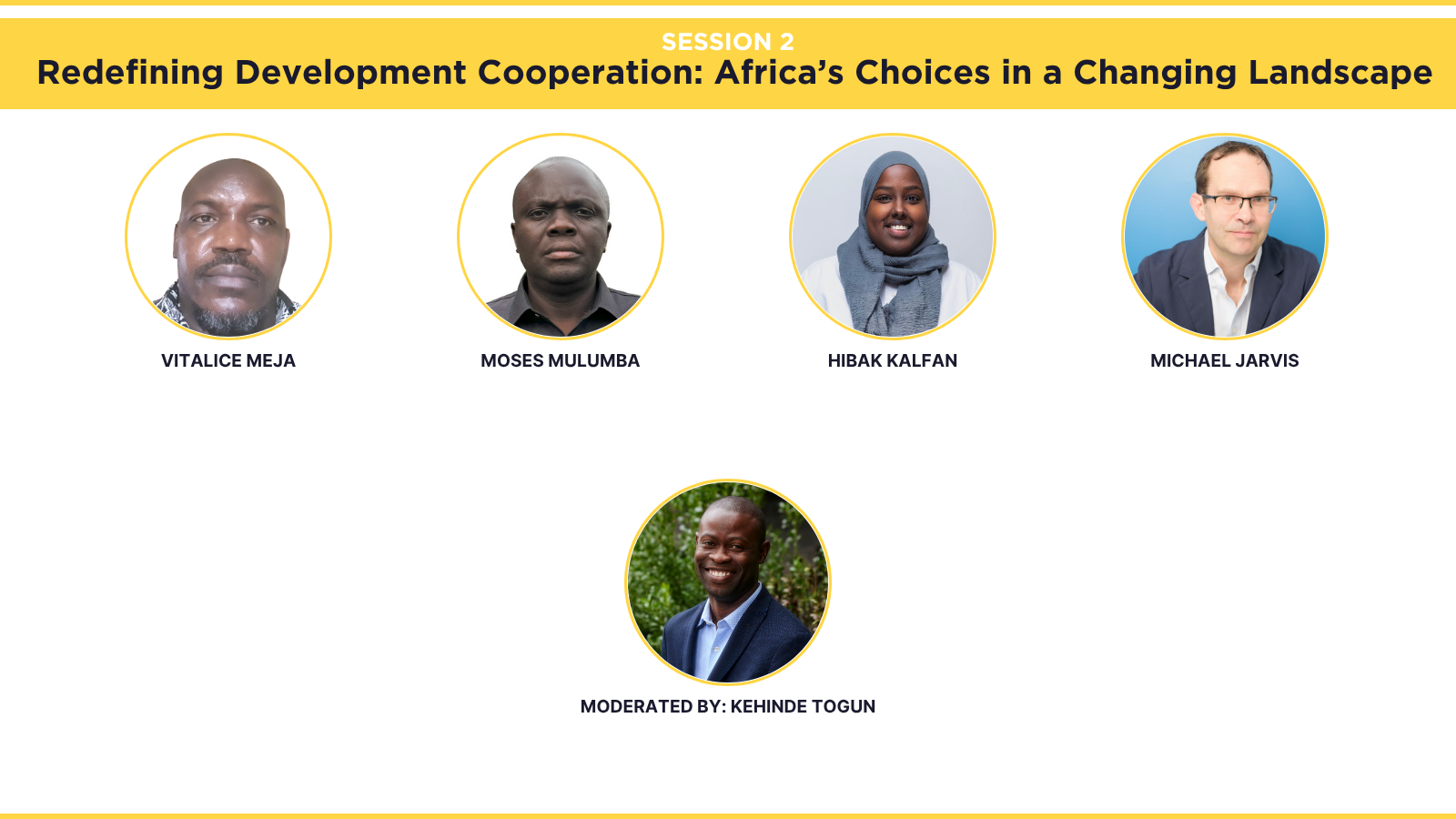
Session 2: Redefining Development Cooperation: Africa’s Choices in a Changing Landscape
This session will examine emerging health compacts, including the America First Global Health Strategy, as well as the Ebola response and its implications for the future of development cooperation in Africa. It will also explore how African countries are responding to peers who have signed on to health compacts and those that have rejected them, as well as the roles civil society organizations have played in challenging their adoption. The session will provide an opportunity to clarify the region’s strategic direction as it relates to the future of development finance, including the role of domestic resource mobilization and external financing.
-
Vitalice Meja
Vitalice Meja. Executive Director of Reality of Aid Africa and a development-policy specialist with over two decades of experience working on development cooperation, aid effectiveness, development finance, and global governance. He has been actively engaged in international policy processes including the Global Partnership for Effective Development Co-operation, Financing for Development, and broader efforts to strengthen African agency in global development debates.
-
Dr. Moses Mulumba
Dr. Moses Mulumba is a Lawyer with special interest in International Human Rights, Global Health and Sexual Reproductive Health and Rights. He founded Afya na Haki Institute, a leading African Institute that generates knowledge and builds advocay capacities in Health, Human Rights and Sexual Reproductive Health, where he is the Founding Director General. Before this, he founded the Center for Health, Human Rights and Development (CEHRD), where he served as the Executive Director for 12 years. He has a Bachelor of Laws (LLB), Post Graduate Bar qualification, a Master of Laws, Master of Philosophy in health sciences and doctor degree in Health Sciences. Mulumba has widely researched, published and taught in the various areas of global health and international human rights. He has been the African Advisor to HIV and the Law Commission and a former Board member to the Uganda National Drug Authority (NDA). He has worked on projects including the global financing facility (GFF) implementation in Uganda, the impact of the global policies on health systems in low-income countries and movement building in Civil Society groups.
-
Hibak Kalfan
Hibak Kalfan is the Executive Director of NEAR, a Global South-led network of local and national civil society organisations challenging top-down aid systems and reimagining community-centred ecosystems of care, response, and solidarity.
-
Michael Jarvis
Michael Jarvis is an expert in good governance and multi-stakeholder approaches to solve development problems. He leads the Trust, Accountability and Inclusion Collaborative – Funders for Participatory Governance, a platform for funder learning and collective action, leveraging over USD 600 million in active grants, at the intersection of democratic, climate and fiscal accountability and justice. Michael is a champion of impactful funding for these issues, advising both philanthropic and government donors.
Responding to recent disruption and uncertainty in the global context, Michael is also guiding a new Funders Roundtable on the Future of Development. The Roundtable brings together over thirty philanthropies to make sense of the shifts underway and to explore how best to help build a more trusted, effective, and equitable development system.
In past roles, notably over a decade at the World Bank, Michael incubated new partnerships to tackle specific issues ranging from a collective against corruption to a business alliance against malnutrition to the Open Contracting Partnership – now a global organization that promotes better outcomes from the estimated $9.5 trillion in public-private contracts globally. Michael has designed and led multi-million-dollar trust funds and new pooled funds to provide grants for civil society and for government capacity building.
A historian and economist by training, Michael began his career working with communities to fight for restitution for environmental damages via strategic litigation. Today, he serves as Chair of the board of Accountability Counsel, an organization committed to amplifying the voices of communities around the world to protect their rights and environment. He also serves as a trustee of Publish What You Fund, and advisory board member of Transparency International US.
-
Kehinde Togun (Moderator)
Kehinde Togun is the Managing Director for Public Engagement and Partnerships at Humanity United.
HU’s Public Engagement Portfolio—comprised of the Independent Journalism & Media, Policy & Government Relations, and Strategic Communications programs—enables Humanity United to advance its mission of cultivating conditions for peace and freedom. The Public Engagement team seeks to build understanding, promote accountability, and marshal action among key stakeholders; it also supports a broad ecosystem of organizations working for peace and freedom around the world. Kehinde previously led HU’s Policy & Government Relations team, which is responsible for engaging governments, multilateral institutions, and civil society in pursuit of policy change and regulatory action.
Kehinde has led global democracy and governance programs for 15 years. He was a Senior Director at The Arkin Group (TAG) where he led complex research projects to help U.S. corporations collect and analyze information to make smarter decisions and investments overseas. Prior to TAG, he managed programs and donor engagements at PartnersGlobal and the National Democratic Institute. At both organizations, he led diverse development initiatives, including training senior staff of the Tanzanian government to improve service delivery to citizens; supporting members of the Iraqi and Kurdistan Parliaments to increase outreach to constituents; working with citizens in Nigeria and Kenya to improve electoral integrity; and enhancing the ability of NGOs in Iraq, Nigeria, Sierra Leone, and Turkey to demand greater accountability from their governments. Kehinde also advised the State Department and USAID on President Obama’s Security Governance Initiative and worked closely with civil society leaders and policy experts to implement the Open Government Partnership in Nigeria and Sierra Leone.
He is on the steering committee of the Peace and Security Funders Group as well as on the boards of The Gem Project, Partners West Africa – Nigeria, and the Center for Racial Justice in Education, an organization that trains and empowers educators to dismantle racism in the US education system. Kehinde’s writing has appeared in Foreign Policy, New York Daily News, and Just Security. He holds a bachelor’s degree from Rutgers University – Newark and a master of public policy degree from Georgetown University’s McCourt School of Public Policy.
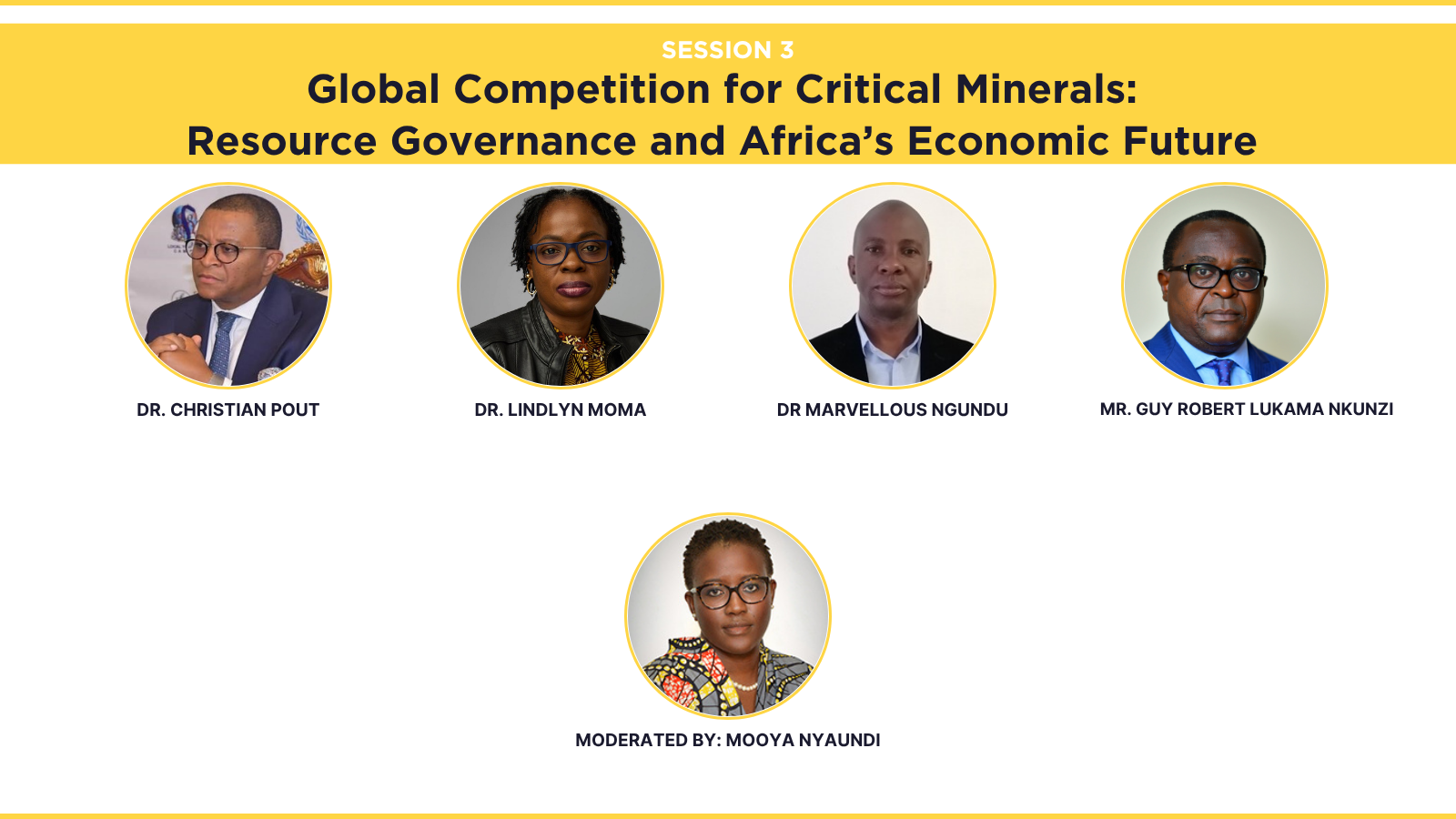
Session 3: Global Competition for Critical Minerals: Resource Governance and Africa’s Economic Future
The discussion will focus on the global race for critical minerals, with particular attention to the United States’ emerging prioritization of its role in its diplomacy with the continent and the implications for African economies and governance. Panelists will situate this global competition within broader geopolitical shifts, examining how evolving supply chain priorities, security interests, and industrial policies are shaping partnerships with African states, particularly in resource-rich regions such as the Congo Basin, the Sahel, and Central Africa. The discussion will highlight actionable policy options for African governments to strengthen domestic value addition, improve regulatory and institutional capacity, and negotiate more balanced and transparent agreements with external partners. It will also explore policy responses to mitigate these risks while positioning African countries to capture greater long-term economic and strategic benefits
-
Dr. Christian Pout
Dr Christian Pout is an internationally renowned expert on the Africa’s peace, security, development nexus issues. He is the Chairman of the Central Africa leading Think Tank CEIDES (www.ceides.org) and Minister Plenipotentiary.
Dr Pout holds a PhD Degree in International Relations and Diplomacy from the EHEI-CEDS Paris. He also holds an Executive Master Degree in Management from the very prestigious HEC Paris Business School. He is a Senior Researcher of the International Politics Department of the International Relations Institute of Cameroon. He is a Visiting Associate Professor at the Catholic Institute of Paris where he leads the African Geopolitics Seminar. He is a research associate of the Tutu Center for War and Peace Studies, Liverpool
Hope University, UK and an international consultant for UNDP, Francophonie, African
Union ACRST, Niger High Authority on Peace Building, ISS, Swiss FDFA among others.
Dr Christian Pout is a member of the Confidentiality Commission of the OPCW, (Organisation for the Prohibition of Chemical Weapons) at The Hague (Netherlands). He is currently the elected Chairperson of this Commission for a two years’ mandate.
Dr Pout has published widely. He recently released ” Eléments de référence pour un dialogue sur les Elections au Cameroun’’. Presses Universitaires de Yaoundé, October 2025. His upcoming publication, ‘‘Enjeux Diplomatiques et Stratégiques Africains’’ will be released in October 2026. He is a regular guest on international and local media such as Africa 24, BBC Africa, VOA, Cameroon Tribune, etc.
-
Dr. Lindlyn Tamufor Moma
Dr. Lindlyn Tamufor Moma is the Director of Research and Strategic Impact at the International Institute for Environment and Development (IIED). A pracademic, she advances human and environmental rights with a focus on climate change justice, critical minerals, sustainable development and energy transitions in Africa.
She has led global advocacy for the Laudato Si’ Movement, directed programmes at Greenpeace Africa, and, during her tenure at Third World Network Africa, she worked with mining-affected communities and mining policies across the continent. There, she co-led the African Initiative on Mining and Environment and served on the founding secretariat that drafted the African Mining Vision.
Lindlyn is a member of the Advisory Board of the International Institute for Democracy and Electoral Assistance, where she is a special adviser to its climate and democracy programme. She also sits on the Board of Razom We Stand, a Ukrainian think tank working on clean energy transitions.
Dr. Tamufor Moma holds a PhD in Law and an LLM in Human Rights and Democracy in Africa and has served as a guest lecturer on climate change and human rights at the University of Pretoria Law School.
-
Dr Marvellous Ngundu
Dr Marvellous Ngundu is a Senior Research Consultant with the African Futures and Innovation (AFI) programme at the Institute for Security Studies (ISS), where he uses the International Futures (IFs) modelling platform to analyse and forecast Africa’s long-term development trajectories. He holds a PhD in Economics from the University of Johannesburg, South Africa, and is a recipient of the 2024 Megatrends Afrika Research Fellowship at the Kiel Institute for the World Economy (IfW), Germany, and the 2020/2021 China Africa Research Initiative (CARI) Fellowship at Johns Hopkins University’s School of Advanced International Studies (SAIS), USA.
His work focuses on international and development economics, with particular emphasis on industrialisation, trade, investment, and sustainable development. He has authored more than twenty peer-reviewed journal articles, as well as numerous policy reports, blogs, and media commentaries. By combining rigorous empirical analysis with practical policy relevance, his work contributes to evidence-based policymaking on Africa’s economic transformation.
A recognised expert on African development, Dr Ngundu is regularly invited to present at international conferences, contribute to expert panels, participate in high-level policy dialogues, and provide commentary across broadcast and print media. Drawing on a continental development perspective and global economic insight, he advances evidence-based policy solutions that promote inclusive, sustainable, and competitive growth across Africa.
-
Mr. Guy Robert Lukama Nkunzi
Guy-Robert is Banker and mining entrepreneur. Hé led the DRC stated-owned mining company Gecamines as Chairman and transformed its business model. Prior to Gecamines, hé sas DRC Country Manager and MD of AngloGold Ashanti interest in DRC and made a MBO of their assets excluding stakes in the famous Kibali Gold. Hé créantes a gold mining company owned by local investors (Mongbwalu gold Mines). As banker, hé worked for Belgoaise, Fortis Bank and BCDC (DRC based bank). He chaired board of directors of BCDC and Bank of Africa DRC. Currently, he serves as CEO of SAKIMA, a DRC state-owned company focused 3T and critic minerals exploration and as non Exécutive directors of several junior mining companies.
-
Mooya Nyaundi (Moderator)
Mooya L. Nyaundi is an international development and public policy professional who most recently served as a U.S. Foreign Policy Advisor at Open Society Foundations, where she led advocacy on U.S.-Africa policy. With more than 15 years of experience spanning law, public policy, governance, and international development, she has advised on complex political and economic issues, including resource governance, democratic institutions, and regional security. Prior to joining OSF, Mooya held senior roles at the American Bar Association and the International Republican Institute, where she managed regional programs, advanced governance and rule of law initiatives, and partnered with governments, multilateral institutions, and development organizations across Africa. A Zimbabwean lawyer by training, Mooya holds a LL.M. from Georgetown and a LL.B. from the University of Zimbabwe.
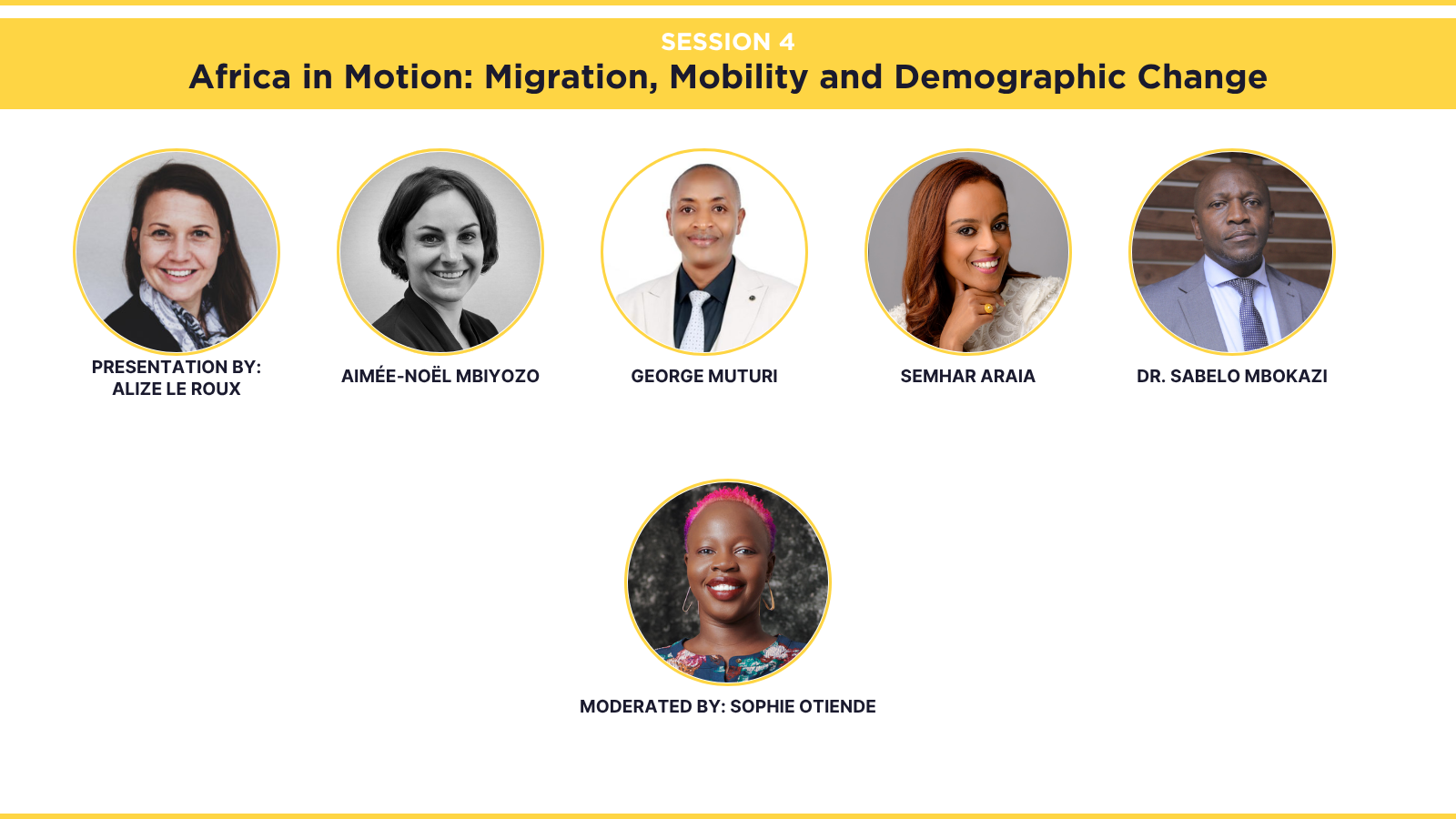
Session 4: Africa in Motion: Migration, Mobility and Demographic Change
This session will open with the launch of the AFI Futures Report on African migration, which examines how demographic change, urbanization, economic transformation, conflict, climate pressures, and migration governance are shaping mobility across the continent. The presentation will highlight the realities of intra-African mobility, displacement, labour migration and Africa’s growing role in global migration systems. Building on these findings, the panel will explore the implications of Africa’s evolving migration landscape for U.S.-Africa relations. Discussions will examine the impact of U.S. migration and deportation policies, visa restrictions, labour mobility pathways and diaspora engagement, while also unpacking how African migration is framed, governed and politicised. The session will further consider Africa’s own migration priorities, including Agenda 2063, the AU Migration Policy Framework for Africa, the Protocol on Free Movement of Persons and AfCFTA, and how these frameworks can support a more balanced, rights-based and mutually beneficial migration partnership between Africa and the United States.
-
Alize le Roux
Alize le Roux joined the AFI in May 2021 as a senior researcher. Before joining the ISS, she worked as a principal geo-informatics researcher at the CSIR, supporting various local and national policy- and decision-makers with long-term planning support. Alize has 14 years of experience in spatial data analysis, disaster risk reduction, and urban and regional modeling. She has a master’s degree in geographical sciences from the University of Utrecht, specializing in multi-hazard risk assessments and spatial decision support systems.
-
Aimée-Noël Mbiyozo
Aimée-Noël Mbiyozo is a senior migration researcher with the Institute for Security Studies, Africa. For the past 15 years, she has worked on the frontlines of the world’s most complex migration settings in Africa and Asia. Her transdisciplinary research focuses on the intersection of migration with other prevailing issues, including climate change, gender, asylum law, human smuggling, violent extremism, and citizenship. She has an extensive publishing record for various audiences, including intelligence, policy-oriented and research
reports, with the goal of enhancing understanding of complex migration themes and driving better policies and practices.
-
George Muturi
George Muturi. I am a Pastor, migrant workers’ rights advocate, and community leader serving as the Head of Secretariat of the Global Migrant Workers Network (GMWN) and the Founder of the Kenyan Diaspora Association Bahrain, currently based in Kenya. My work is centered on protecting the dignity, rights, and welfare of migrant workers and their families through advocacy, pastoral care, leadership development, and community empowerment. Over the years, I have worked closely with migrant communities, faith leaders, civil society organizations, and other stakeholders to promote fair labor practices, provide humanitarian support, and strengthen networks that respond to the challenges faced by migrant workers globally and the returnees.
Through my leadership in GMWN and the Kenyan Diaspora Association Bahrain, I continue to champion justice, unity, and hope for vulnerable communities while creating platforms for collaboration, awareness, and support. I am passionate about building strong partnerships, empowering individuals through faith and mentorship, and inspiring positive change within migrant and diaspora communities.
My mission is to see every migrant worker treated with dignity, protected from exploitation, and empowered to reach their full potential.
-
Semhar Araia
Semhar Araia is the CEO of The Diaspora Academy, a global diaspora advisory firm and leadership institute helping to advance diaspora contributions to development. TDA has trained over 400 diaspora changemakers representing 80 countries, and regularly advises global and national institutions.
-
Dr. Sabelo Mbokazi
Dr. Sabelo Mbokazi holds PhD in Public Policy and Administration with dissertation focusing on Cybersecurity (Walden University,USA) and MCom (University of KwaZulu Natal, RSA). He is working for the African Union Commission as Head of Labour, Employment & Migration. He has gained extensive experience in multilateral public policy formulation, research, analysis, and advisory roles at Head of State and Minister levels. He provided expert advice to guide the formulation of Trafficking in Persons (TiP) and Smuggling of Migrants (SoM) continental policies. He is charged with a responsibility to provide strategic direction to advance African Union Migration Policy Framework as well as Labour and Employment policies toward achieving Agenda 2063 continental strategic vision. Dr. Mbokazi spearheaded several continental initiatives including the establishment of Africa Migration Data and Research Centres in Mali, Morocco and Khartoum, AU-Gulf Labour Migration Dialogue.
Dr. Mbokazi has extensive experience in multilateral institutions, including working for SADC Parliamentary Forum and UN-IOM. He is the current Co-Chair of AU-EU continent-to-continent (C2C) Migration and Mobility Dialogue. Furthermore, Dr. Mbokazi provides strategic leadership to AU-EU-UN Tripartite Taskforce which coordinates repatriation of stranded migrants in Libya and along the Mediterranean area. Dr. Mbokazi represents AU and serves and contribute to Migration, Labour and Social Protection policy discourse in global technical working groups and Communities of Practice (CoP), including World Economic Forum (WEF) Leadership Council, UN Taskforce on Social and Solidarity Economy (UNTSSE). Professional affiliation includes membership in the global cybersecurity Forum of Incident Response and Security Teams (FIRST), Academic Security, Special Interest Group (SIG)
-
Sophie Otiende (Moderator)
Sophie Otiende defines herself as a feminist, teacher, and survivor advocate for human trafficking survivors. Over the past decade, she has focused on creating ethical standards for protection of survivors of human trafficking, developing systems for grassroot organizations addressing the issue, training, and development of curriculums for both protection and awareness of human trafficking. This work plus her advocacy for standards of care for protection of survivors of trafficking has made her a global expert on protection. She is passionate about ethical engagement and storytelling of survivors of trafficking. She firmly believes in a future where empathy, harmony and trust can be articulated in processes and systems in institutions seamlessly. She is the founder and Co-Weaver of Collective Threads Initiative which is a movement building initiative that focuses on resourcing cross movement work that centers dignity. She is also the retired founder of Azadi Community which is a survivor collective based in Kenya.
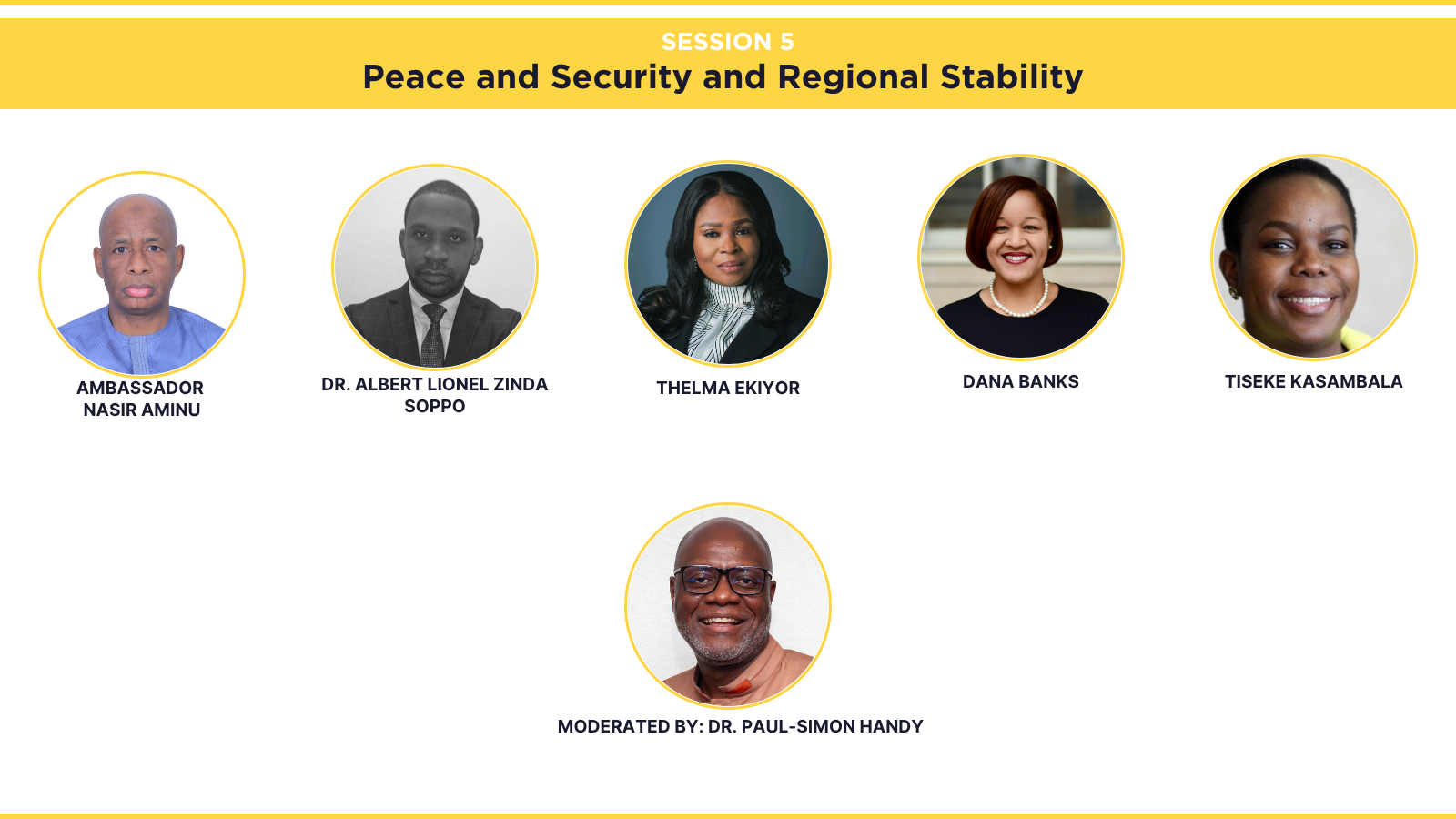
Session 5: Peace and Security and Regional Stability
This session will focus on the U.S.-led peace processes and their implications for Africa’s peace and security infrastructure, with a focus on Sudan, the Democratic Republic of Congo, Nigeria and Rwanda. It will explore how U.S. diplomatic, security, and political engagement in these contexts is affecting conflict dynamics and regional stability, while interacting with African-led peacebuilding efforts and institutions such as the African Union. Grounded in these case studies, the discussion will critically assess the effectiveness, limitations, and unintended consequences of externally driven peace processes, including questions of ownership, legitimacy, and sustainability, and will highlight opportunities for more coordinated, inclusive approaches that strengthen Africa’s own peace and security infrastructure.
-
Ms. Thelma Ekiyor
Ms. Thelma Ekiyor is the author of Women Entrepreneurs as Catalysts in Post-Conflict Africa and an award-winning global leader in women’s economic empowerment, philanthropy, impact investing, and international development, with over 27 years of experience across Africa, Europe, and the UK.
Pioneering leader across international development, impact investing, and philanthropy, Thelma has founded several institutions, including SME.NG, Afrigrants, the TY Danjuma Foundation, and the West African Civil Society Institute (WACSI), and is a co-founder of Women in Philanthropy & Impact Africa (WIPIA).
Recognized among Africa’s 50 Most Influential Women in Development, she has received multiple international awards for her contributions to philanthropy, social entrepreneurship, and women’s empowerment. Thelma is a Doctoral Researcher at Cranfield University, holds an MBA from Imperial College London and an LLB from the University of Buckingham, and serves on various boards and investment committees across Africa and Europe.
-
Dana Banks
Dana Banks is a transformational senior executive with over 25 years of experience driving the strategic visions of six U.S. presidential administrations. Internationally and politically astute foreign policy trailblazer skilled at leading teams in promoting and executing demanding initiatives and managing crises. Dana is known for her strategic ability to establish the vision, direction, and structures that empower teams to thrive through uncertainty and deliver on innovative, ambitious initiatives. Throughout her career, Dana has fueled economic growth by advancing global trade and investment in areas including digital transformation, critical minerals, sustainable energy, global health, agriculture, and infrastructure.
As a former Senior Foreign Service Officer, White House Senior Director, and trusted Advisor to the President of the United States, Dana is a consensus builder with sound judgment who lays the groundwork for engagement to implement critical priorities. She is skilled at cultivating meaningful multilateral relationships that advance the priorities of vested parties to strengthen existing partnerships while cultivating new economic and social relationships on public policy. Dana is an insightful visionary with strong organizational orientation who has advocated for economic growth through increased investment, trade, and diversification in resources. An expert relationship builder with extensive experience navigating complex institutions, Dana forges alliances across sectors, countries, and cultures that unlock game-changing opportunities.
-
Tiseke Kasambala
Tiseke Kasambala is a human rights and philanthropy leader with more than 20 years of experience advancing human rights, democratic governance, civic participation, and social justice across Africa. She currently serves as Head of Human Rights at the Irene M. Staehelin Foundation in Zurich, Switzerland where she leads the Foundation’s human rights strategy, partnerships, and grantmaking portfolio across Africa and globally.
Prior to joining the Foundation, Tiseke held several senior leadership roles in the international human rights and philanthropy sector, including serving as Africa Director at Freedom House and as Deputy Executive Director and Head of Programmes at Open Society Initiative for Southern Africa (OSISA), where she oversaw a multi-million-dollar regional grants portfolio and provided strategic leadership across programmes operating in multiple African countries. Earlier in her career, she worked with Human Rights Watch and Amnesty International as a human rights researcher and campaigner.
Tiseke has extensive experience international justice, rule of law and human rights, strategic philanthropy, movement support, and ecosystem-building in politically complex and rapidly changing environments. She has led and supported initiatives on civic space protection, women’s rights, accountability for atrocity crimes, digital governance, youth participation, and access to justice and rule of law.
She is also a regular commentator and writer on human rights, democracy, and African governance issues, and her opinion pieces and analysis have appeared in a range of local and international media outlets. Tiseke holds a Master’s degree in Social Sciences from the University of Amsterdam.
-
Dr. Albert Lionel Zinda Soppo
Dr. Albert Lionel Zinda Soppo is a Cameroonian international strategy analyst, researcher, and specialist in international relations, diplomacy, geopolitics, and strategic and security affairs. He currently serves in the Analysis, Foresight and Cooperation Division at the Port Authority of Douala, where he contributes to strategic analysis, prospective studies, international cooperation, and assessments of geopolitical, security, and economic developments affecting the port and its broader regional environment.
He holds a PhD in International Relations from the Protestant University of Central Africa, a Master’s degree in Geopolitics and Foresight at the French Institute for International and Strategic Affairs (IRIS), as well as a Master’s degree in Diplomacy and International Relations from the Institute of Preparation for General Administration of the University of Bretagne Occidentale. His academic background further includes a Master’s degree in Corporate Governance from the University of Bordeaux IV Montesquieu and an MBA in Sustainable Performance Management from ISC Paris.
His professional and academic interests lie at the intersection of international relations, diplomacy, geopolitics, peace and security, counter-terrorism, violent extremism, maritime security, international cooperation and strategic foresight. His security-related work includes the analysis of maritime insecurity, terrorism, and violent extremist threats in the Sahel and the Lake Chad Basin, with particular attention to regional security dynamics, cross-border threats, the evolution of terrorist and insurgent groups, regional security cooperation, and the geopolitical implications of insecurity for African states.
-
Ambassador Nasir Aminu (Opening Remarks)
Ambassador Nasir Aminu is Nigeria’s Ambassador to Ethiopia and Djibouti and its Permanent Representative to the African Union and the UN Economic Commission for Africa. A career Foreign Service Officer since 1997, he has risen from Third Secretary to Special Grade Director through postings in Amman, Seoul and Istanbul, representing Nigeria at forums from G-8 and OPEC summits to the UN General Assembly and the African Union’s Peace and Security Council. Fluent in Hausa, English, and French, with working knowledge of Arabic, he has built a diplomatic career defined by quiet, consistent impact, earning commendations from Nigeria’s foreign ministers and the D-8 Secretariat.
-
Dr. Paul-Simon Handy (Moderator)
Dr. Paul-Simon Handy is the Regional Director for East Africa and Representative to the African Union at the Institute for Security Studies, Addis Ababa. He first joined the ISS in 2007 and held various positions, including division head, research director, and acting deputy executive director. He was on the UN Panel of Experts on the Central African Republic between 2013 and 2018 before rejoining the ISS in 2019 as a senior advisor. Paul-Simon is a visiting lecturer at Rhodes University in South Africa and held teaching positions at the Free University of Berlin before acting as Associate Fellow with the Stiftung Wissenschaft und Politik in Berlin. He studied political science and international relations at the universities of Yaounde, Berlin and Leipzig where he obtained his PhD in 2005.