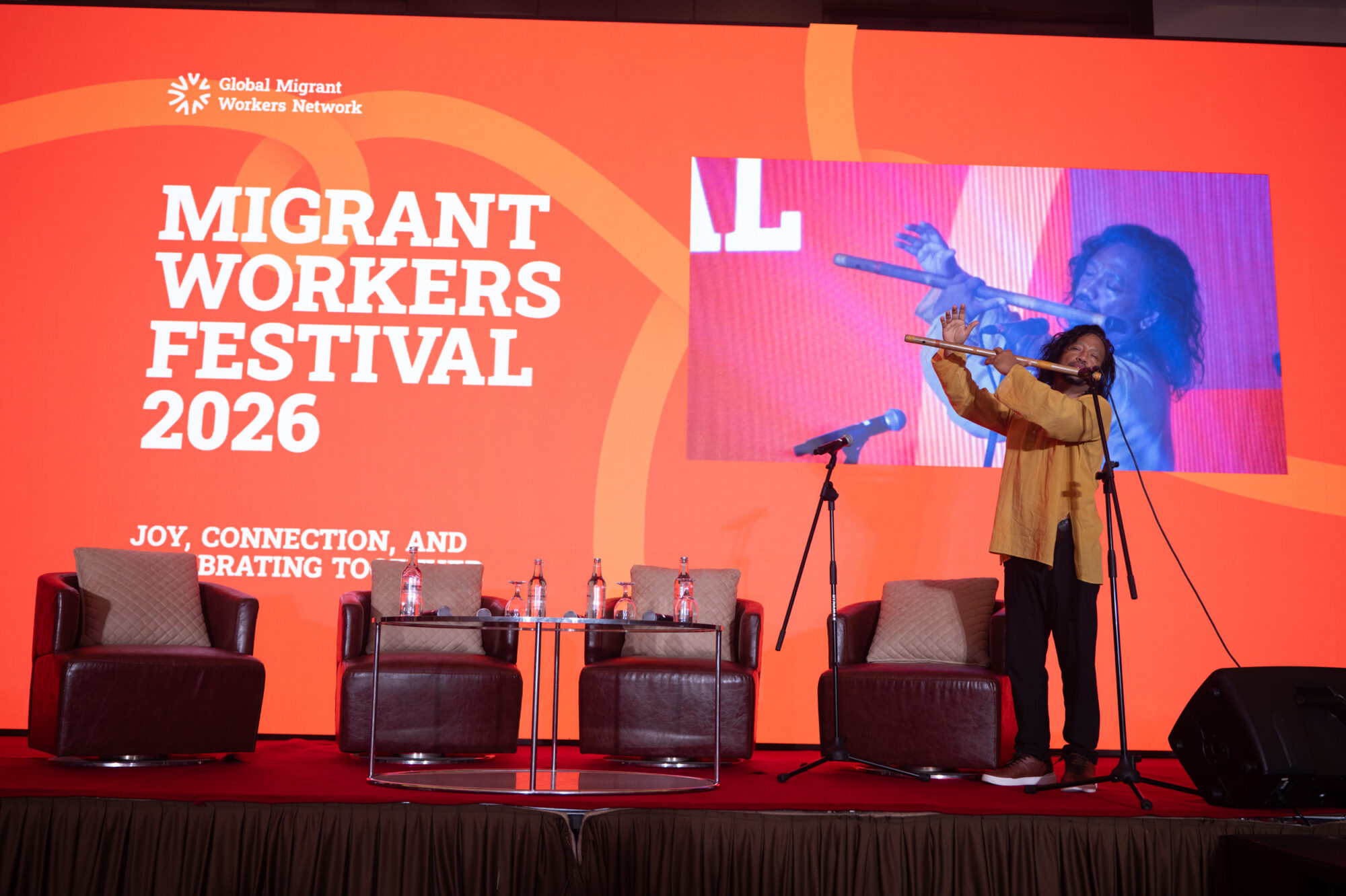
The Global Migrant Workers Network (GMWN) hosted the first-ever Migrant Workers Festival in Kuala Lumpur in June, bringing together nearly 100 migrant worker and survivor leaders, community organizers, artists, journalists, funders, practitioners, and allies from across Africa and Asia.
While conversations about migration often focus on policies and systems, the Festival was designed to create space for the people behind those discussions – their experiences, relationships, creativity, resilience, and leadership. Through community gathering, dialogue, storytelling, music, and shared reflection, participants came together not only to discuss migration but to build deeper understanding and connection across communities and regions.
As one of Asia’s most important migration corridors, Malaysia provided a fitting setting and an opportunity to engage with migration as a lived reality through the communities, organizations, and workplaces that shape everyday life.
The Festival itself was designed as a journey: beginning with immersion in the realities migrant workers navigate every day; moving into conversations on leadership, solidarity, and change; and creating space for music, storytelling, creativity, cultural expression, and collective reflection. It concluded by looking ahead to what participants would carry forward as individuals, communities, and movements.
Strengthening a Worker-Led Network
Prior to the public program, GMWN’s Leadership Council met to advance governance, strategy, and organizational priorities for the network’s next phase of growth. The Council also elected Ndagire Joanita Joshirah from Uganda as its new Chair, marking an important milestone in GMWN’s continued institutional development.
Day One: Immersion and Grounding
The Festival opened with community immersions across Kuala Lumpur. Participants visited organizations working on disability inclusion, refugee livelihoods, social enterprise, migrant domestic worker organizing, and community-led development, including Dialogue Includes All, Earth Heir, the Sea Monkey Project, The Green Factory, APPGM-SDG, and PERTIMIG.
The groups later came together at Dignity for Children Foundation, where they learned about efforts to provide education, skills development, and opportunities for children from refugee and marginalized communities. Collectively, the visits offered insights into the ecosystems of support, inclusion, entrepreneurship, and community leadership that surround migrant and refugee communities in Malaysia.
The day concluded with a Community Circle featuring music, sound healing, shared meals through refugee-led social enterprise PichaEats, and a conversation with Afghan refugee Chef Feroza on resilience, leadership, and rebuilding lives.
Day Two: Dreams, Struggles, and the Road In Between
The second day focused on storytelling, wellbeing, and worker leadership. The program opened through music, poetry, and storytelling from Malaysian artists and members of the Domestic Workers Advocacy Network (DoWAN), before moving into conversations on migration journeys, resilience, organizing, and collective action.
Highlights included a virtual keynote conversation with 2022 Nobel Peace Prize Laureate Oleksandra Matviichuk, reflections from Bezwada Wilson of the Safai Karmachari Andolan, thematic dialogues on crisis response, rebuilding lives, and philanthropy, and a presentation from the World Economic Forum’s Global Data Partnership Against Forced Labour featuring perspectives from migrant workers themselves.
The day closed with a solidarity and cultural night bringing together music, poetry, comedy, cultural traditions, and performances from migrant worker leaders and local artists.
Day Three: Carrying It Forward
The final day turned toward solidarity, allyship, and the future of worker-led leadership. Participants heard a special message from IOM Director General Amy Pope, joined a wellbeing session led by Grammy-nominated music composer Manose Singh Newa, and engaged in thematic conversations on youth engagement, ethical recruitment, media, and cross-sector collaboration.
A recurring theme throughout the day was the importance of shifting from supporting migrant workers to creating pathways for migrant workers to shape decisions, influence institutions, and lead movements themselves.
From the beginning, the Festival was built around three simple ideas: joy, connection, and celebrating together. One of the greatest gifts of the gathering was seeing those values come alive through the participants themselves in the community visits and leadership dialogues that opened new perspectives; in the difficult conversations and moments of joy; and in the rekindling of old friendships and spark of new ones.
At its heart, this event was a reminder of the need for spaces for migrant workers to connect and support one another as they organize, lead, and shape the conversations and decisions that affect their lives. While this milestone Festival has ended, the journey continues.