This year, the Humanity United team had the opportunity to attend the 2025 Build Peace Conference, held in Santa Coloma de Gramenet, a municipality bordering Barcelona. Co-organized by Build Up and the International Catalan Institute for Peace (ICIP), the conference brought together practitioners, activists, artists, and technologists exploring the intersections of technology, peacebuilding, and the arts.
The theme for 2025, Towards a Pluriverse of Peace, invited us to imagine multiple coexisting pathways to peace. Sub-themes explored the tensions between polarization and deliberation, deterrence and nonviolence, and erasure and memory.
As a philanthropic organization, we are aware that the systems we operate within are often restrictive—full of overwhelming agendas, strict timelines, and unspoken expectations of performance. Build Peace has consistently offered something different: a space that centers diversity, accessibility, and care as core design principles rather than afterthoughts.
Inclusivity was a defining aspect of the Build Peace conference, with organizers intentionally involving underrepresented groups including women, minorities, elders, youth, and Indigenous people. This year, however, hosting the conference in Europe presented significant challenges for many who faced restrictive and inequitable visa processes. The conference team worked closely with participants needing visa support and was transparent throughout the event in naming this barrier whenever presenters were absent or joining online. Even with this care, these realities highlight the need to continue expanding conversations about the structural obstacles—visas, caregiving responsibilities, work constraints, and more—that determine who is able to be in the room and who is excluded.
Care and wellbeing were embedded into the conference’s design from the very beginning. The organizers provided an extensive logistics guide that covered everything from visa processes and transportation to currency, medical resources, weather, and emergency contacts, ensuring participants felt supported even before arriving. The agenda itself reflected this commitment to care, with generous breaks built into the schedule to allow time for rest, reflection, and meaningful connection. During the event, dedicated staff members were available throughout the day to assist participants in multiple languages and in whatever ways they needed—emotional, physical, or practical. And, of course, the gathering included a much-anticipated dance party—a joyful reminder that celebration and community are also essential parts of collective wellbeing.
Although Build Peace is known for its strong focus on technology and peacebuilding, the sessions hosted by Humanity United grantees this year were rooted in healing, embodiment, and storytelling.
- Embodying Care: The Power of Pause: Led by partners from the Unyoke Foundation, Resonance Network, Urgent Action Fund, and the Milk Tea Alliance, this experiential workshop invited participants to slow down, listen deeply, and explore the radical act of pausing. Through somatic practice, art, and circle sharing, we explored what becomes possible when we allow ourselves to move at the pace of care.
- Writing as Resistance, Self-Reflection, and Healing: Facilitated by partners from the Resonance Network, the International Center on Nonviolent Conflict, and independent peacebuilders from Colombia and South Africa, this workshop started from the understanding that our bodies hold both trauma and the possibility for healing. Writing became a way to reconnect with ourselves, reclaim what has been silenced, and share stories that carry intergenerational wisdom and solidarity.
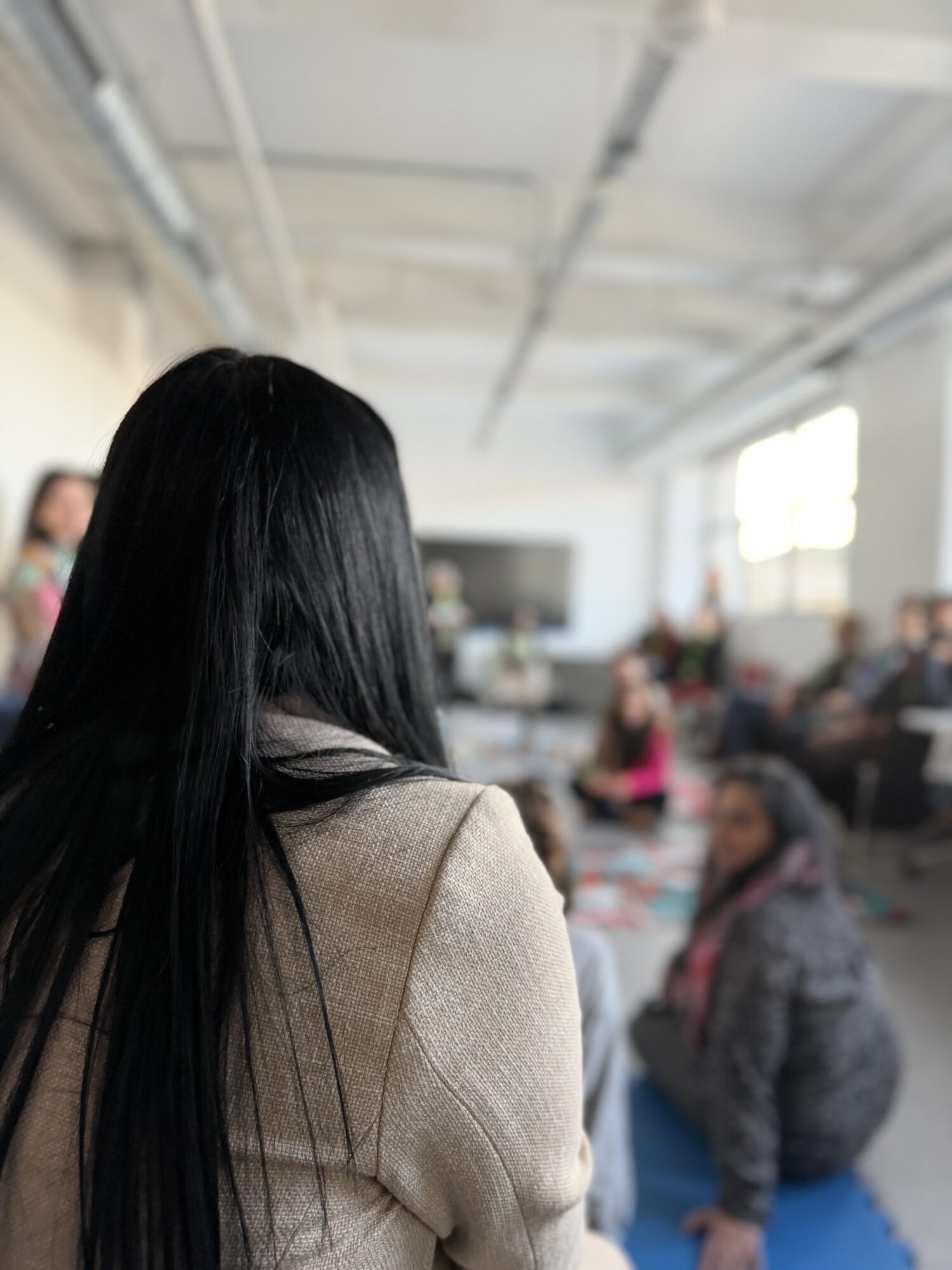
During one of these sessions, one participant remarked, “We are used to being uncomfortable.” This simple sentence captured so much. From the physical spaces of typical conferences to the emotional demands of constant productivity, many of us rarely encounter environments designed with our wellbeing in mind. These sessions intentionally disrupted that norm. Chairs were arranged in a spacious circle, with the option to sit on the floor. Facilitators modeled comfort and choice by sitting barefoot. Art supplies—markers, crayons, colored pencils—were placed throughout the room for people to use whenever they felt moved to.
Both workshops were grounded in reflection, slowness, and care, and the response was profound. Rooms were full, conversations continued long after the sessions officially ended, and participants expressed how meaningful it was to have spaces centered on healing within a peacebuilding conference.
In the closing ceremony, the final speaker named and applauded these sessions—recognition that reaffirmed the importance of bringing diverse voices, bodies, and lived experiences into spaces where they are not always present. Doing so doesn’t just shift the narrative; it creates the possibility of entirely new ones.
Our experience at Build Peace 2025 reminded us that peacebuilding is not only about tools, methods, or technologies—it is also about how we gather, how we care for one another, and how we make space for the stories and practices that allow us to heal.
We left with a renewed belief in the power of intentionality, community, and the radical act of slowing down.