On October 8, 2026—roughly three months after the congressionally mandated deadline —the U.S. Department of State released its 2026 Trafficking in Persons (TIP) Report, assessing global and country-level efforts to combat human trafficking, including forced labor.
About the TIP Report
- Human trafficking and forced labor are global human rights issues that also affect the United States.
- The U.S. State Department publishes the TIP Report each year to assess nearly 200 countries using information from governments, nongovernmental organizations, and other stakeholders.
- Countries are ranked by their efforts to prevent trafficking, protect survivors, and prosecute traffickers. Tier 1 indicates that minimum standards are met; Tier 2 reflects significant but incomplete efforts; Tier 3 signals insufficient action.
- The report is an effective tool to monitor global human rights benchmarks and provides evidence for advocates and policymakers in the United States and abroad.
Humanity United (HU) partners with many organizations working to eliminate forced labor and human trafficking. Our Forced Labor & Human Trafficking portfolio seeks to address human trafficking by addressing the root causes of vulnerability and by elevating survivor voices. We believe that the power to determine solutions belongs to those most directly impacted.
Forced labor is well documented across industries, including agriculture, fishing, manufacturing, construction, and domestic work. To address this, governments must hold public and private actors accountable, regulate high-risk industries, protect workers’ rights, and require due diligence across supply chains.
At a high level, HU agrees with the report’s recommendations that focus on strengthening survivor-centered systems —including protecting survivors from prosecution for acts committed as a direct result of trafficking— while integrating health, mental health, legal, and social services, and requiring trauma-informed training for criminal justice actors. However, we remain apprehensive about the U.S. government’s ability to enforce these recommendations amid spending cuts to federal offices that are specifically responsible for implementing anti-trafficking policy recommendations.
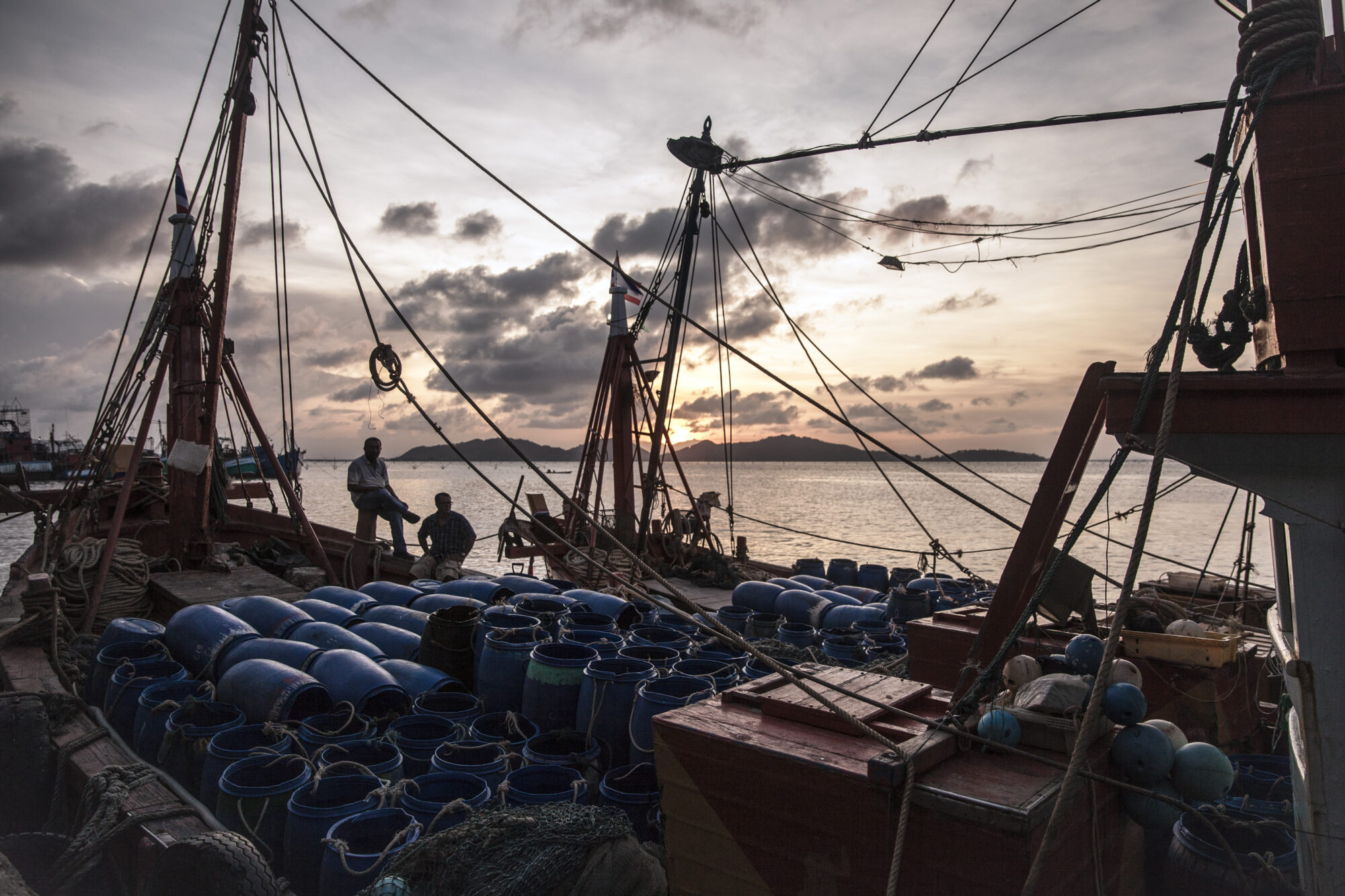
Our country analysis of the TIP Report focuses on and Thailand, particularly on exploitation in seafood supply chains, which is one of our areas of work. We also focus on the United States, where HU is headquartered.
Country Findings
Indonesia
Indonesia remained at Tier 2 because of insufficient reporting, oversight, enforcement, and survivor services. Although the Indonesian government issued updated standards for fishing-vessel crews, it reported fewer investigations, did not disclose prosecution figures, convicted only four traffickers, and made little progress on victim support. High-level corruption and the participation of law enforcement and politicians in trafficking across industries continues, worsening the chances of successful labor law enforcement.
Employers are required to cover migrant workers’ placement costs, including training, certification, travel, visas, medical examinations, and social security, but workers still report paying these fees. Further, oversight in the fishing sector also remains weak, and many fishers lack information about their rights.
A longstanding licensing dispute compounds these risks. Government Regulation No. 22/2022 designated the Ministry of Manpower as the licensing authority for recruitment agencies, but the Ministry of Transportation has not transferred authority. The resulting fragmented oversight leaves fishers vulnerable to abusive recruitment and makes grievances harder to resolve. HU is supportive of the TIP report’s attention to these issues but questions Indonesia’s continued Tier 2 ranking.
It is also worth noting that after the reporting period for the TIP report, President Prabowo Subianto signed Presidential Regulation No. 25 of 2026, ratifying ILO Convention 188 on May 1, 2026. The measure seeks to strengthen protections for fishing-vessel crews, including fair wages, regulated work and rest hours, adequate accommodation and food, and medical care. This is an important step to ensure that the government’s labor laws are in line with international standards. Consistent implementation and accountability mechanisms will be crucial to monitor over the next year.
Taiwan
Although Taiwan met the minimum standards, the Report notes that authorities convicted fewer labor traffickers, prosecuted fewer suspects, and did not fully implement victim identification procedures. Migrant workers in the seafood sector continue to face wage withholding, document retention, physical violence, and other coercive practices.
Distant-water fishers remain excluded from Taiwan’s Labor Standards Act, leaving them with lower wages and weaker protections for overtime, insurance, and health. Stronger rules must be matched by enforcement, meaningful sanctions, and multidisciplinary inspection of teams with adequate authority.
Key parts of the Action Plan for Fisheries and Human Rights, including crew Wi-Fi access, were not implemented during the reporting period. The 2026–2029 Phase II plan had not been approved as of July 2026; it should include a binding midterm review and independent evaluation.
Taiwan has also chosen to negotiate “fee guidelines” with source countries over an employer-pays principle, which states that all worker-paid fees should be eliminated and paid by employers instead. Otherwise, the consequent wage withholding (and debt bondage) will persist aboard vessels. Document retention, such as withholding passports or other forms of identification, also remains pervasive for migrant workers in the Distant Water Fleet. Taiwan should also reform the Ministry of Labor’s 1955 complaint hotline through victim-centered training, adequate port facilities, and regular engagement with unions and civil society.
Thailand
Thailand remained at Tier 2. While the Thai government has made strides and efforts to reform and implement laws to protect workers, progress remains uneven. The TIP Report documented weak regulation of electronic wage payments, amendments to the Fisheries Act that reduced worker safeguards, and declines in trafficking investigations, prosecutions, convictions, and identified victims.
The Thai Parliament’s amendments to the Fisheries Act B.E. 2558 (Fisheries), which seeks to combat illegal, unreported, and unregulated (IUU) fishing and strengthen labor protections in the sector, included reduced penalties for fishing, the reauthorization of night fishing, and the removal of key labor protections in seafood processing, risking the safety of Thai workers.
Protections under ILO Convention 188 have not been fully realized. Fishers still face health and safety risks, unclear contracts and pay systems, retaliation for reporting abuse, and inconsistent inspections through the Port-In-Port-Out system.
Higher energy prices have led vessels to suspend or shorten trips, reducing incomes. Workers may receive no pay while boats are docked, yet sector-specific permits prevent them from seeking other employment. Following the 2025 Thailand-Cambodia border conflict, an estimated 400,000 Cambodian workers left Thailand, where many who remained could not renew travel documents. Problems with e-Work Permit smart cards — including data errors, delays, and high informal fees —risk pushing documented workers into irregular status and debt.
Victim protection also remains inadequate. Inconsistent interviews and the requirement that foreign-born survivors remain in shelters throughout legal proceedings leave many without resources and discourage reporting.
United States
During the reporting period, the United States government terminated programs across multiple agencies that aimed to combat and respond to human trafficking and forced labor in the U.S. and abroad. This included the termination of $500 million in program funding for the Department of Labor’s Bureau of International Labor Affairs and $1.3 million for the Department of State’s Office to Monitor and Combat Trafficking in Persons that worked to eliminate child labor, prevent exploitation, uphold freedom of association, support trade unions, build capacity, and strengthen enforcement mechanisms that combat forced labor worldwide. The State Department office responsible for combating human trafficking also faced 70% cuts to personnel, which has significantly decreased staff capacity to fully implement the programs and policies in place to address trafficking internationally.
As it relates to domestic programming, the Department of Justice cancelled more than 500 grants, including funding for survivor-service providers. In addition, the administration also failed to release $88 million in congressionally appropriated funding for trafficking prevention and survivor services, creating gaps in access to services and legal counsel across the country. The Department of Justice asserted that organizations that received funding in the past wouldn’t necessarily receive funds in the future, and funding would remain in accordance with the Trump administration’s priorities.
In addition, the U.S. Trade Representative (USTR) began investigations into 60 economies under Section 301 of the Trade Act of 1974 during the reporting period. By June, USTR’s plan to impose tariffs on 59 countries and the European Union for insufficient adoption or enforcement of forced labor import bans had been announced. Import restrictions can block goods made with forced labor from entering U.S. markets, but tariffs alone do not directly support affected workers or fully dismantle the systems enabling exploitation. The U.S. government should ensure that trade agreements with forced labor commitments include the technical assistance and monitoring needed to implement them, and that tariff determinations account for whether partners are making verifiable progress on labor rights.
By reducing staff, terminating programs, and withholding appropriated funds to anti-trafficking programs, the Trafficking Victims Protection Act’s framework for prevention, prosecution, and survivor protection were significantly undermined and disrupted during the reporting period. The National Action Plan to Combat Human Trafficking also lapsed without renewal.
Opportunities for Protection, Prevention, and Prosecution
Continued progress to combat and respond to human trafficking requires sustained funding, oversight, and accountability. While the TIP report remains an effective tool for identifying progress and areas for improvement in forced labor and human trafficking, the 2026 report did not provide country-specific policy recommendations, depriving the governments it monitors of concrete steps to improve, regulate, and enforce labor laws within their countries. The report reminds us that without effective enforcement and accountability efforts, policy recommendations fall short. Humanity United, along with our partners and networks, will continue to collaborate with both governments and civil society organizations to work toward the prevention of exploitation and the protection of survivors.